"we all have different journeys to the same destination."
Final edit
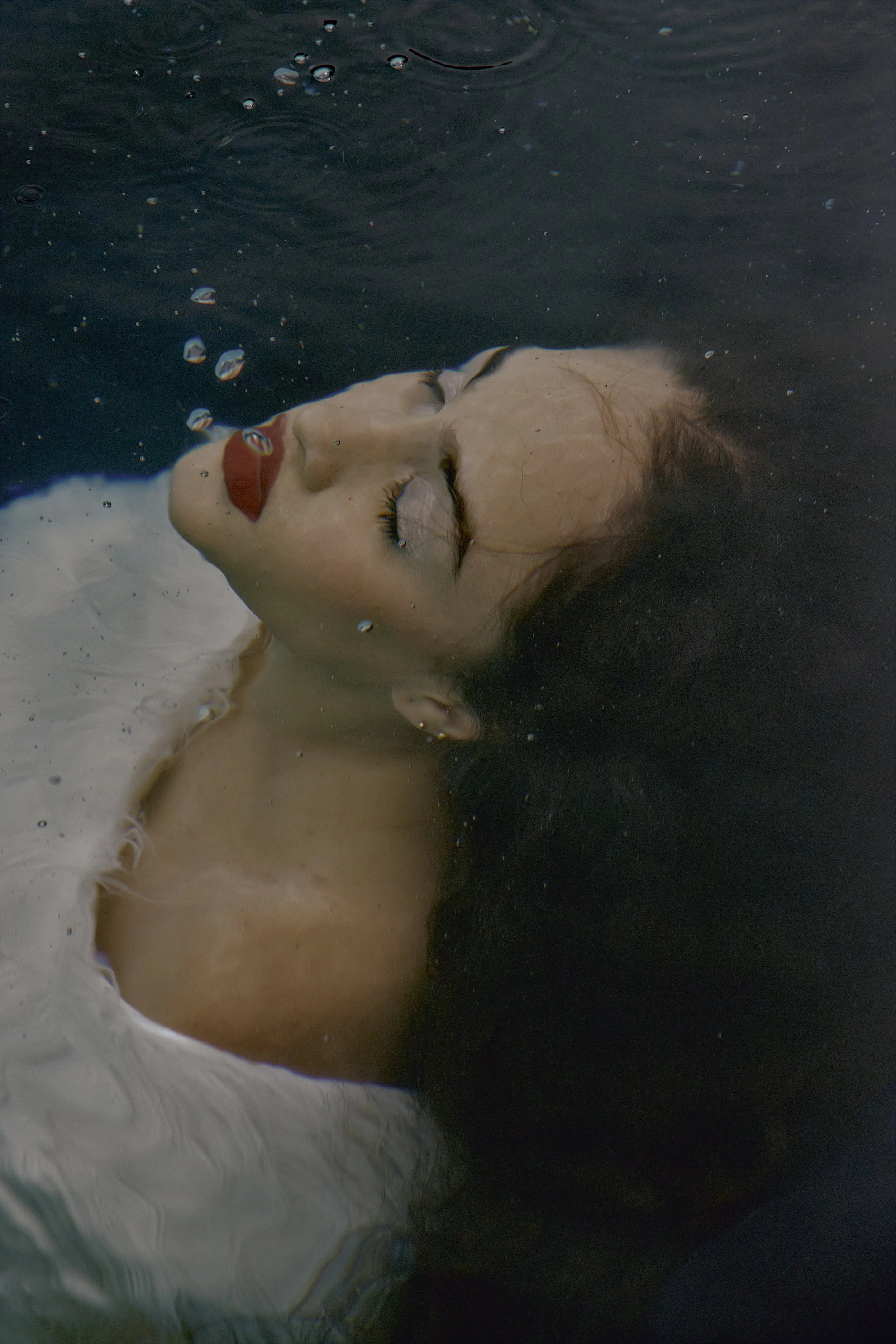
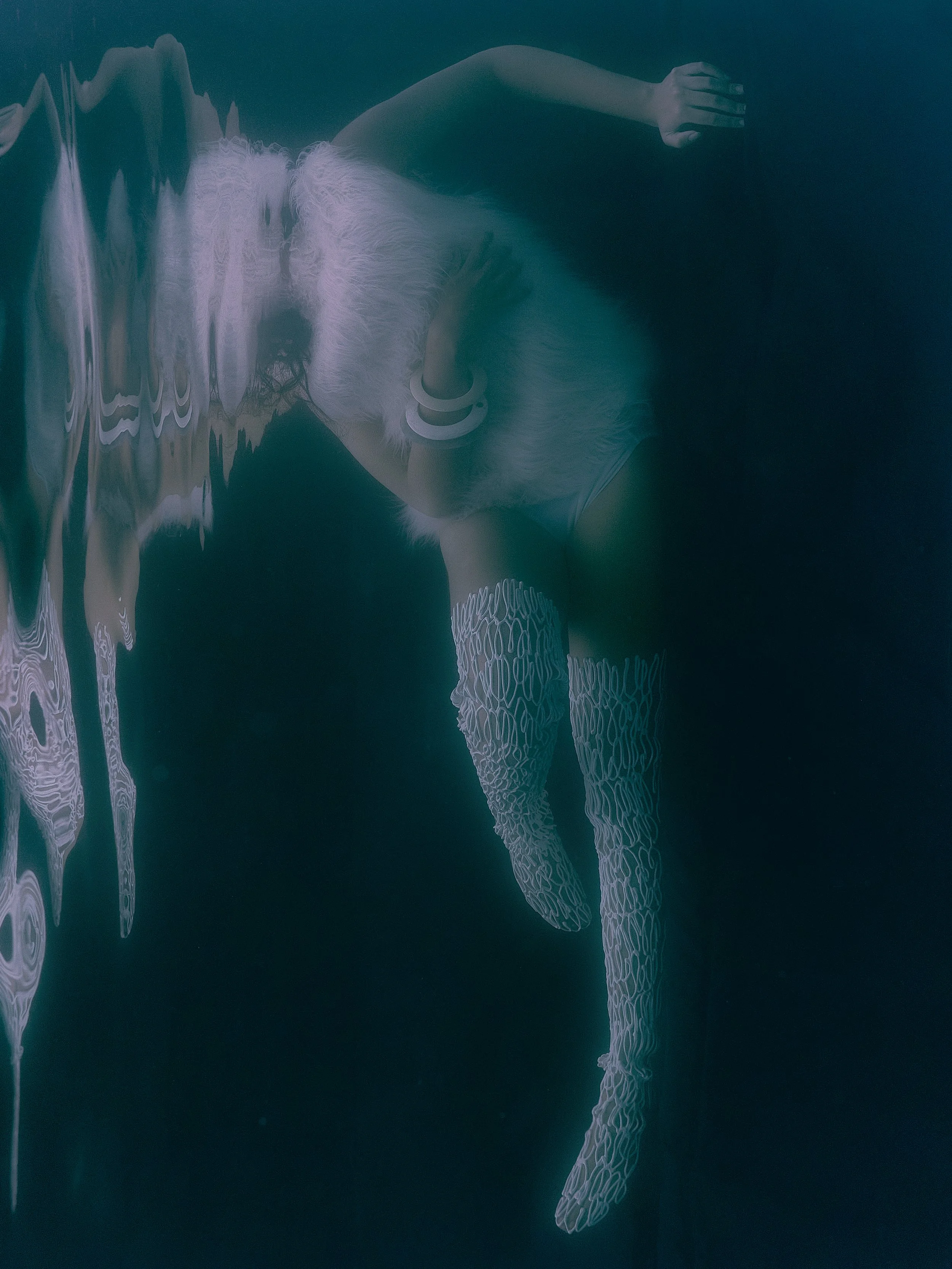
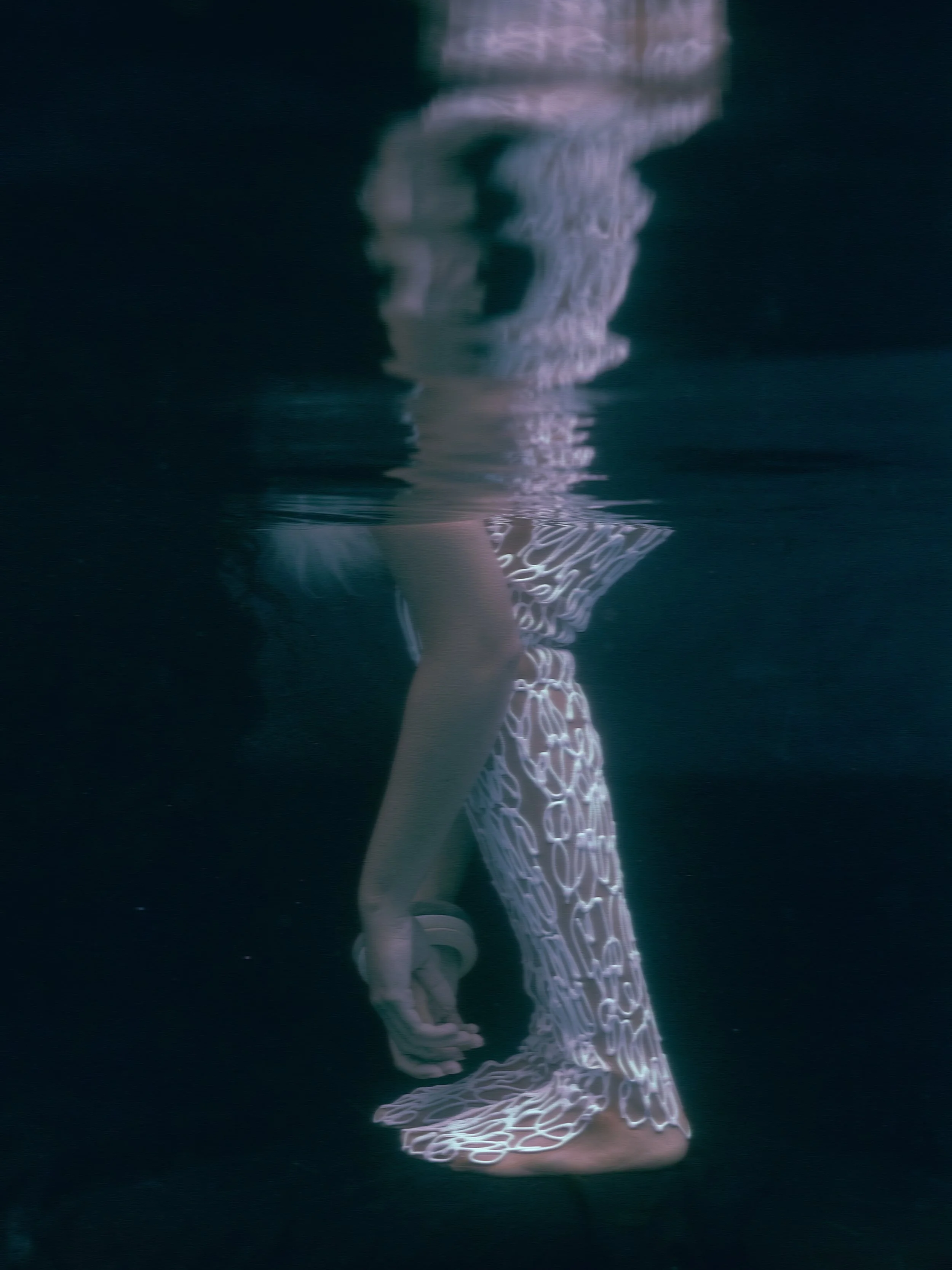
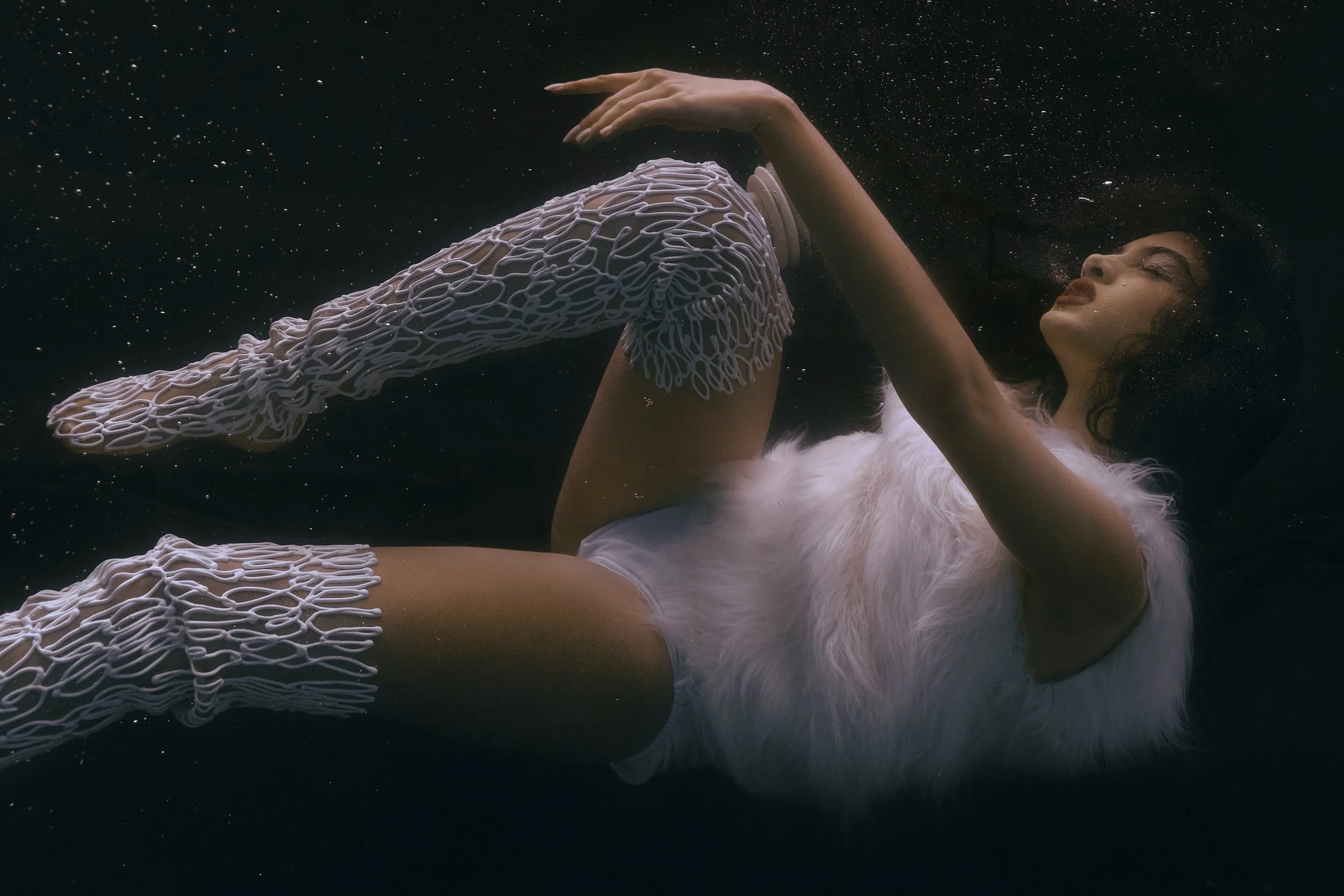
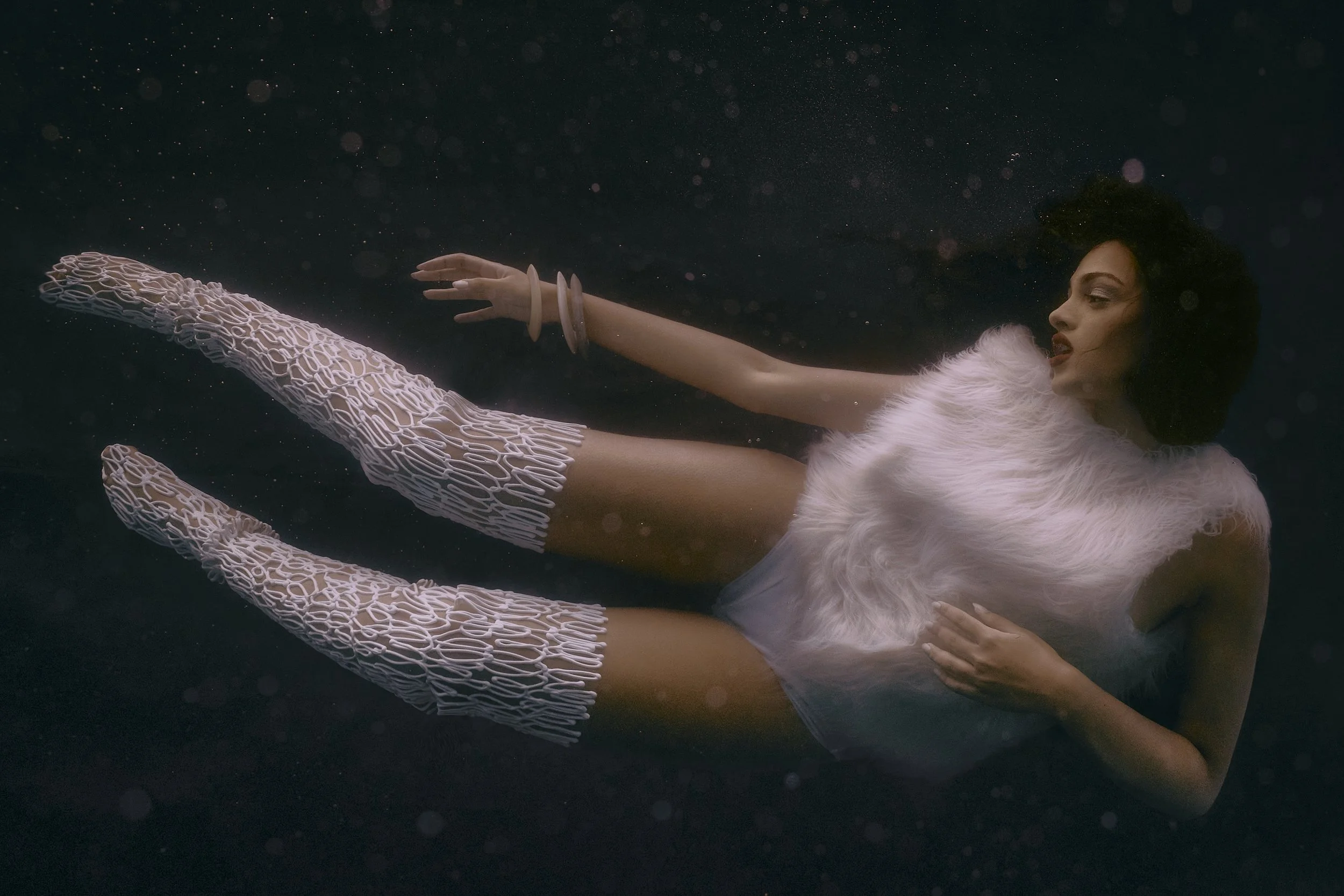
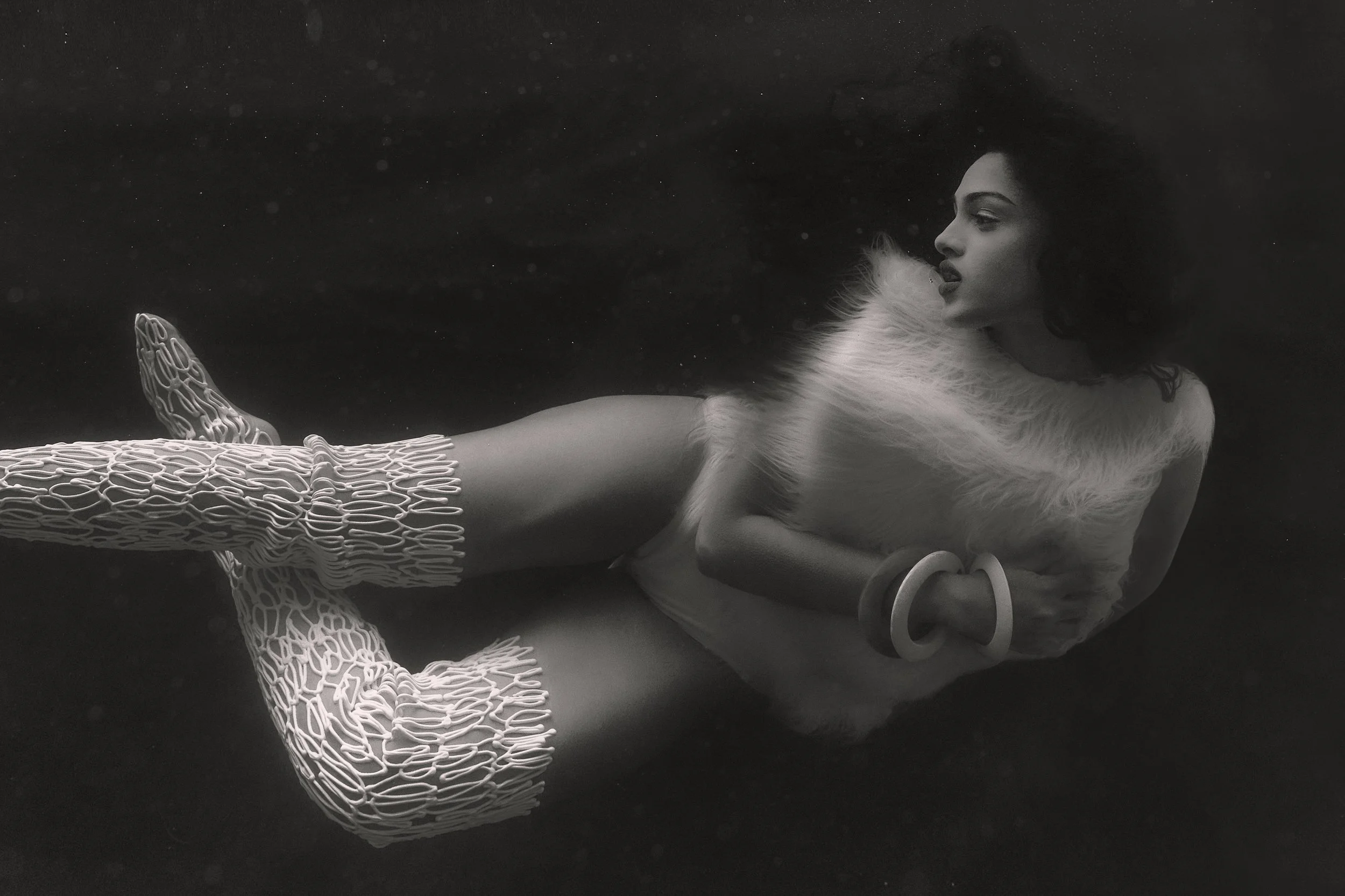
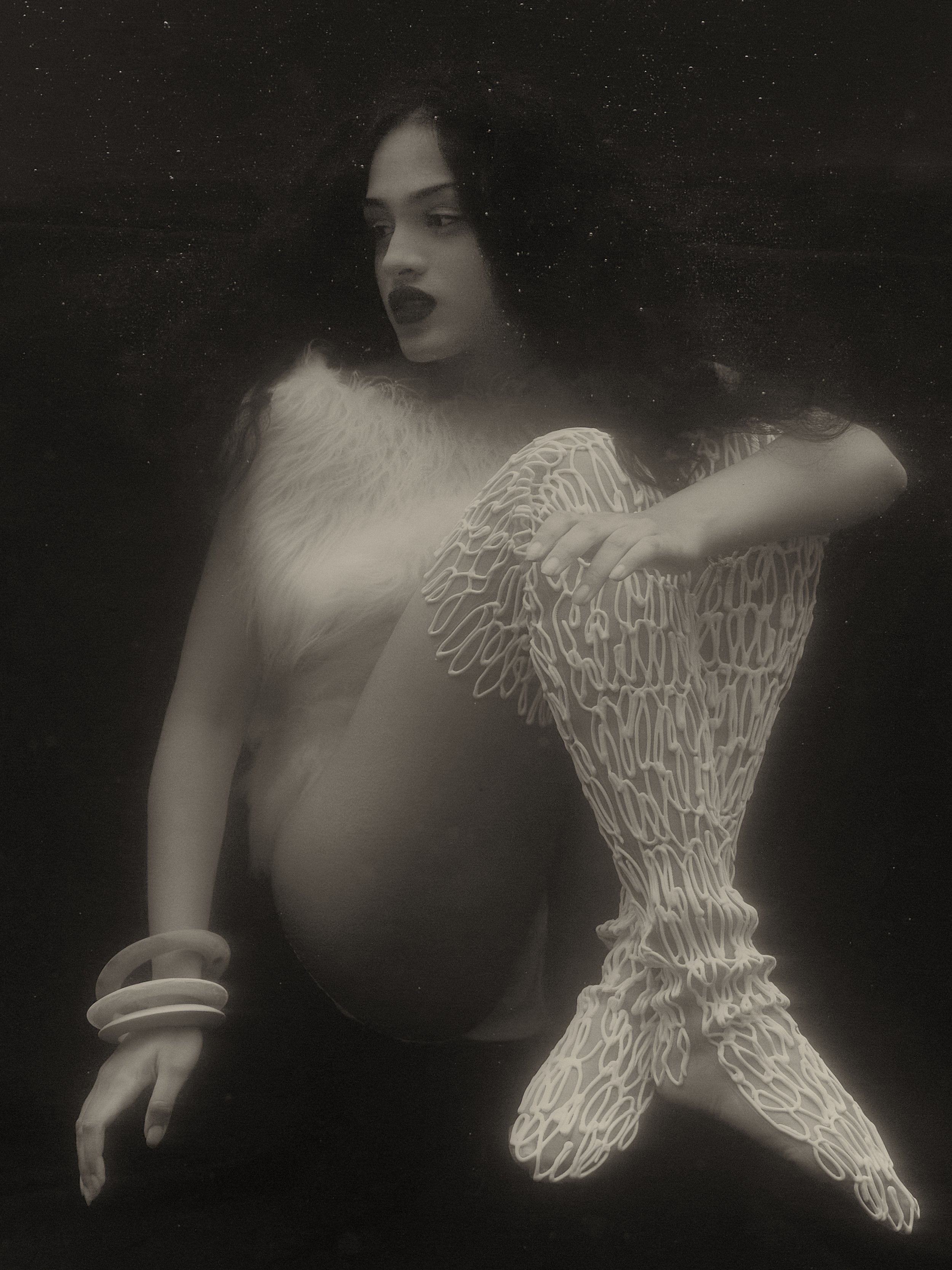
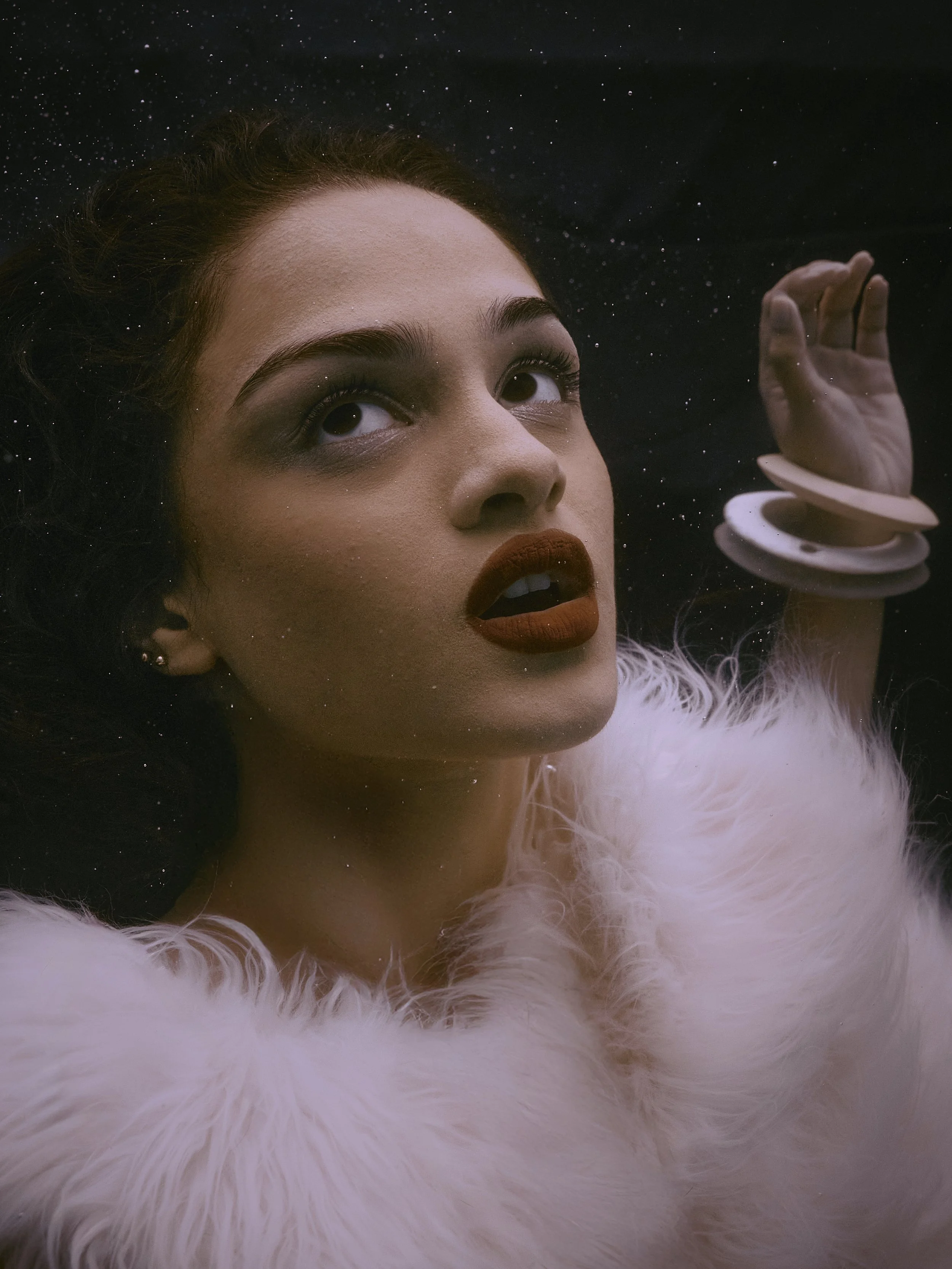
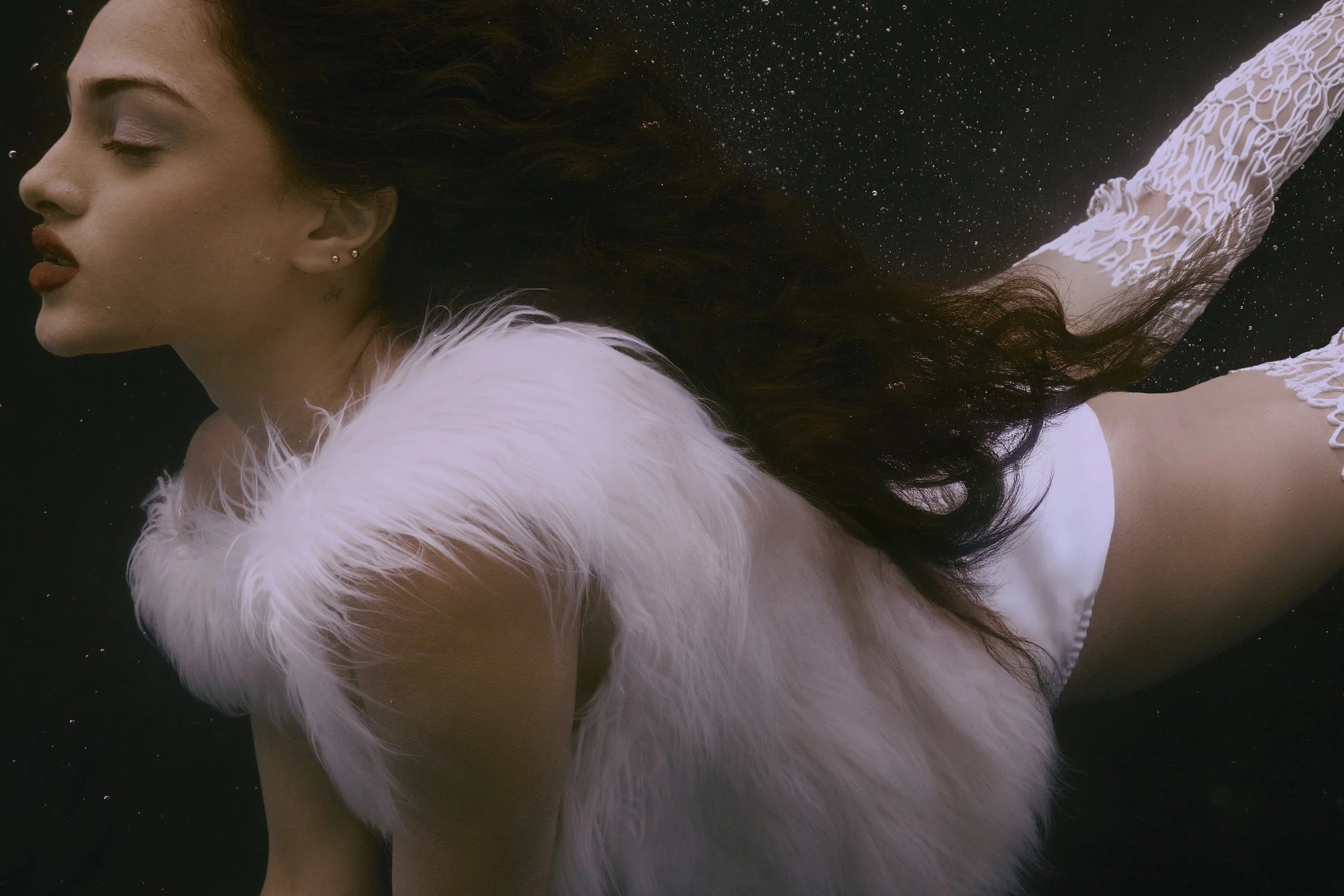
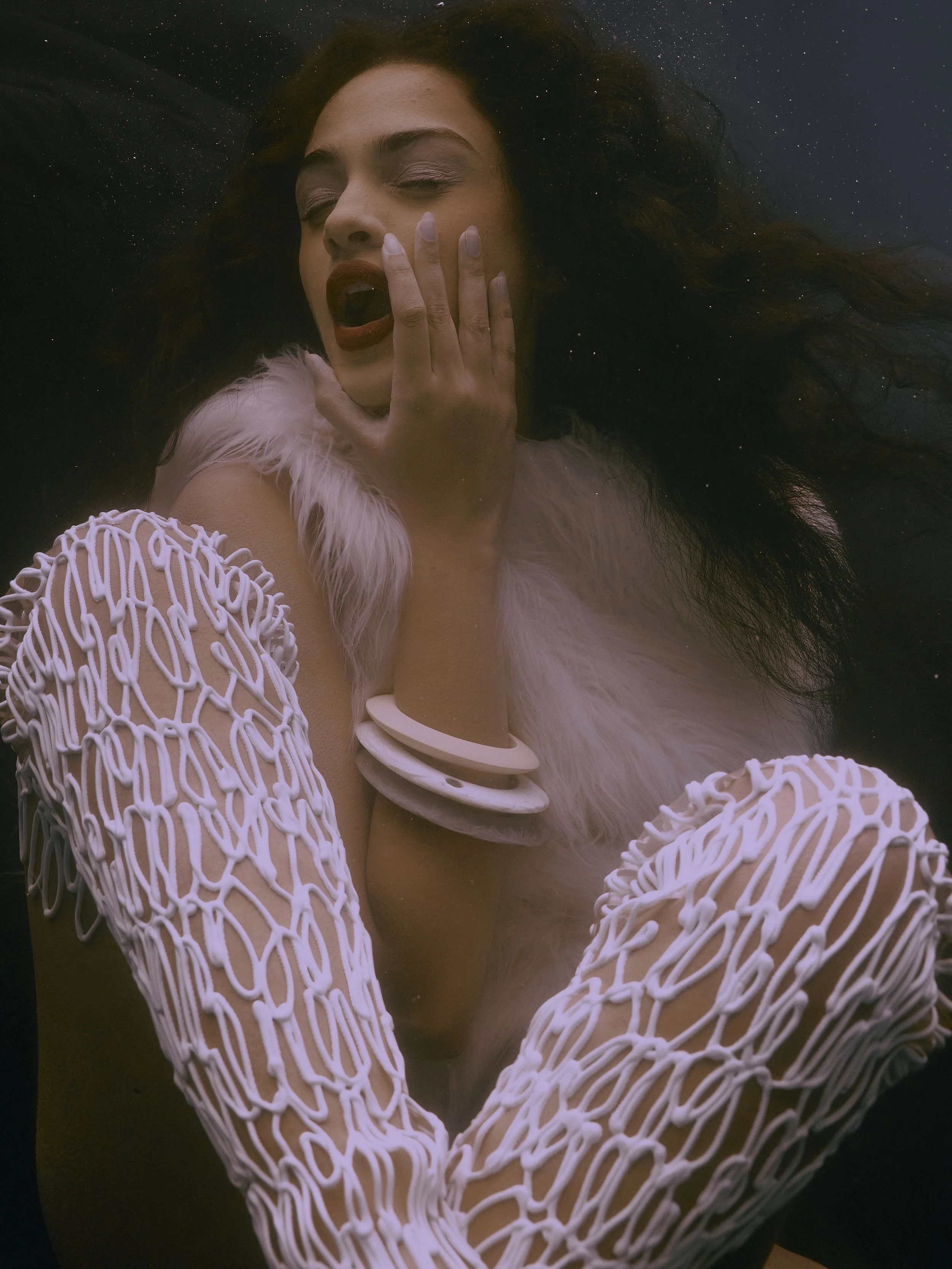
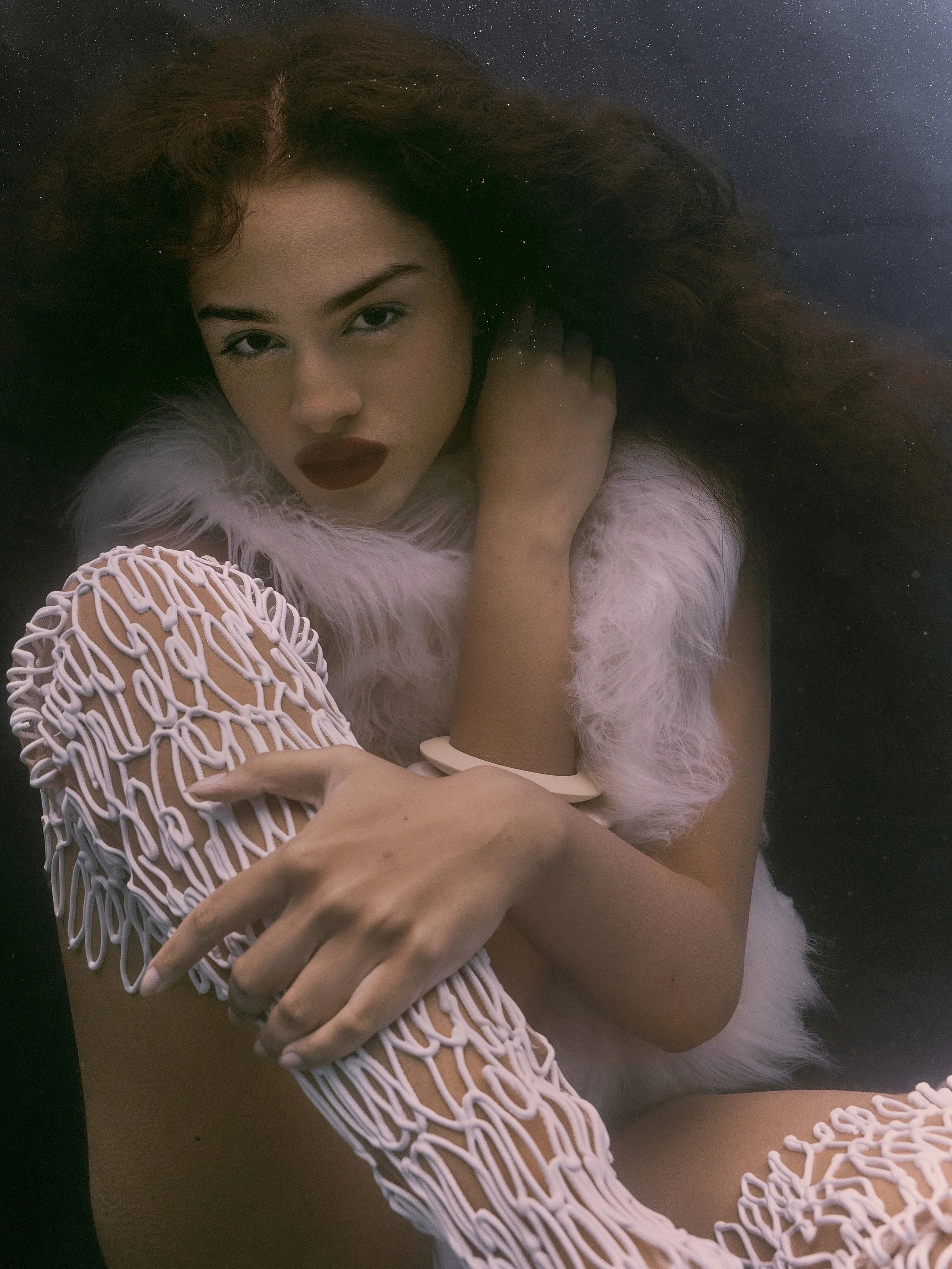
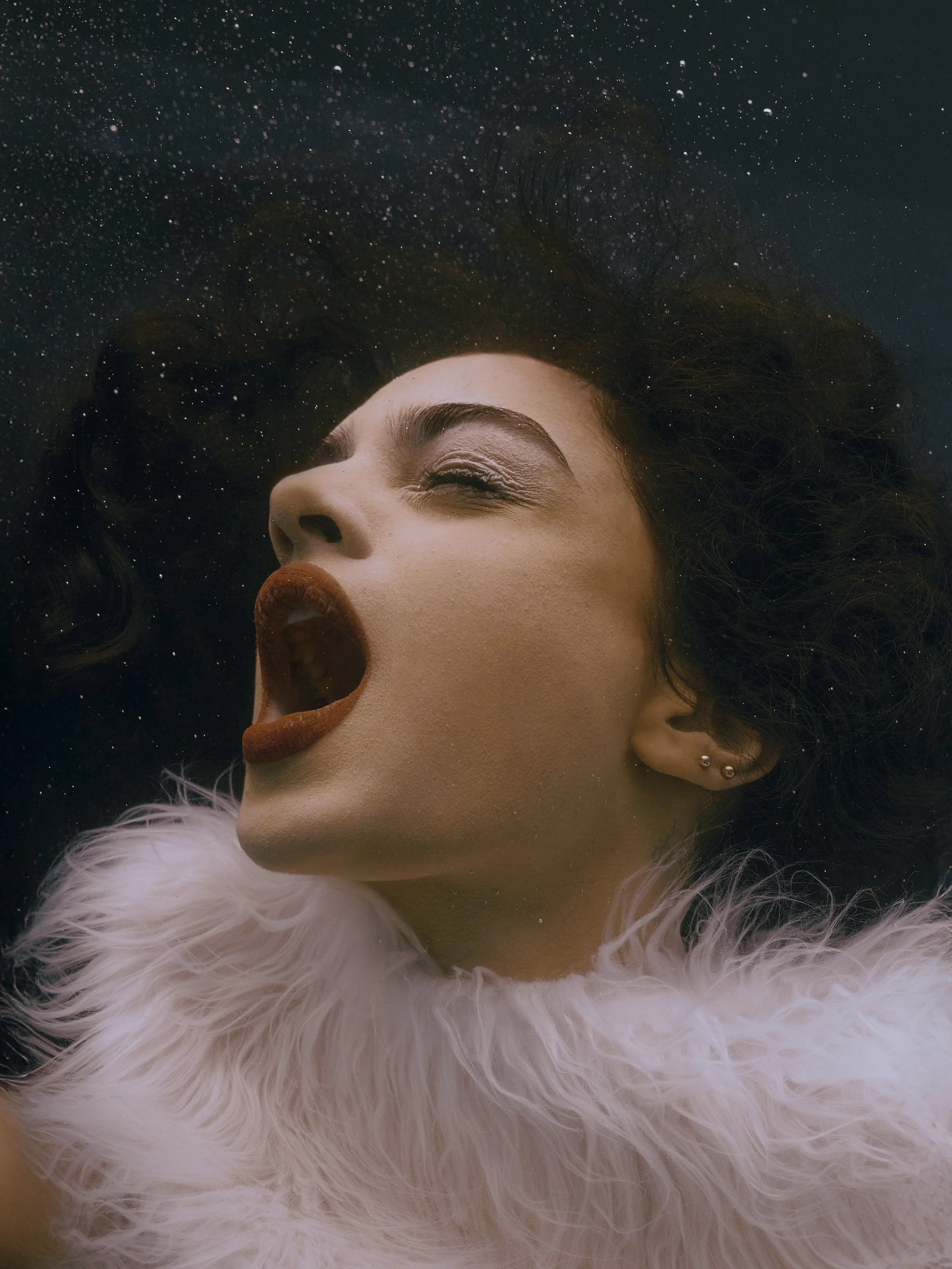
Title: Eau Noir
Featured: Personal project
Outtakes
Q&A
Give us some background on this project.
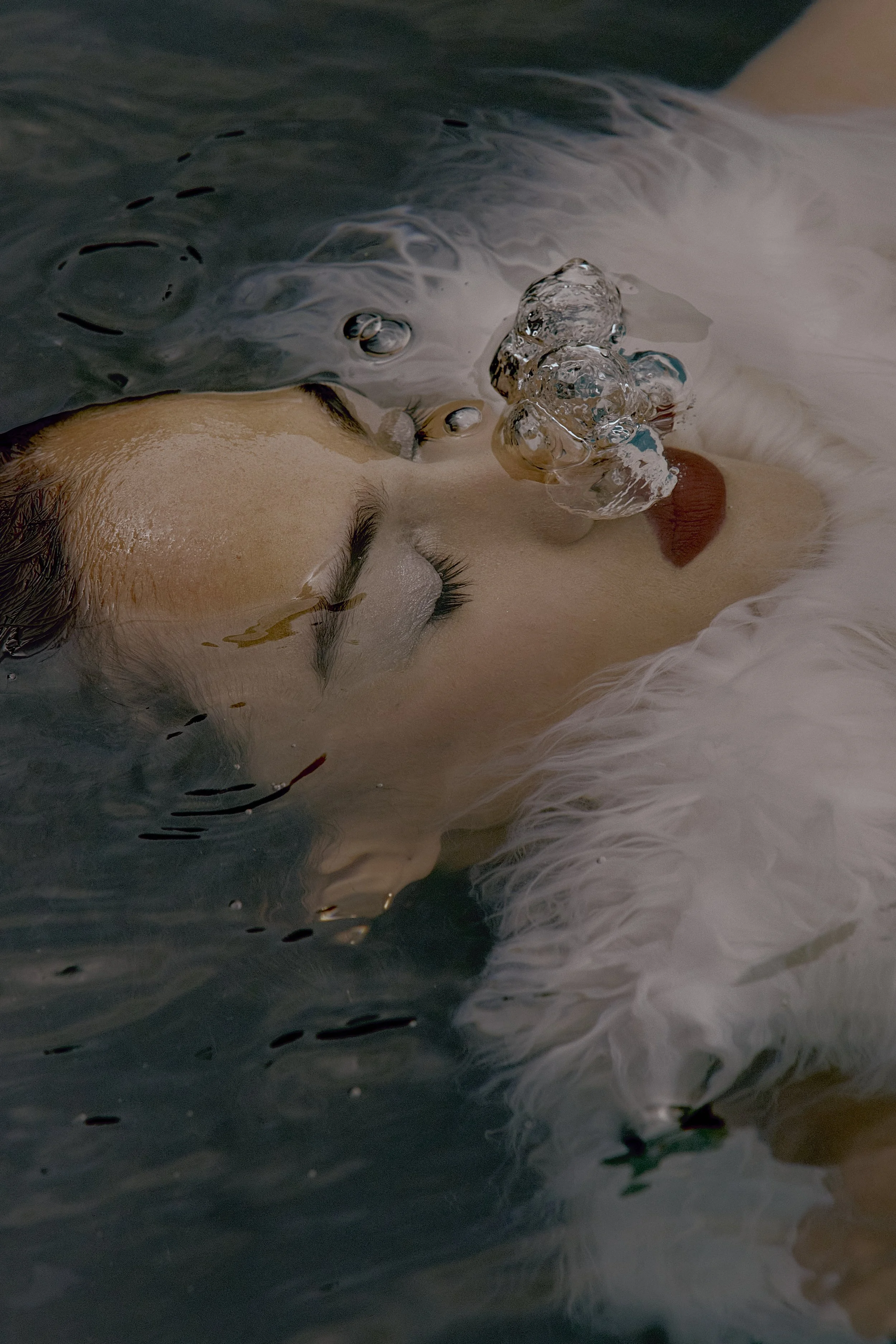
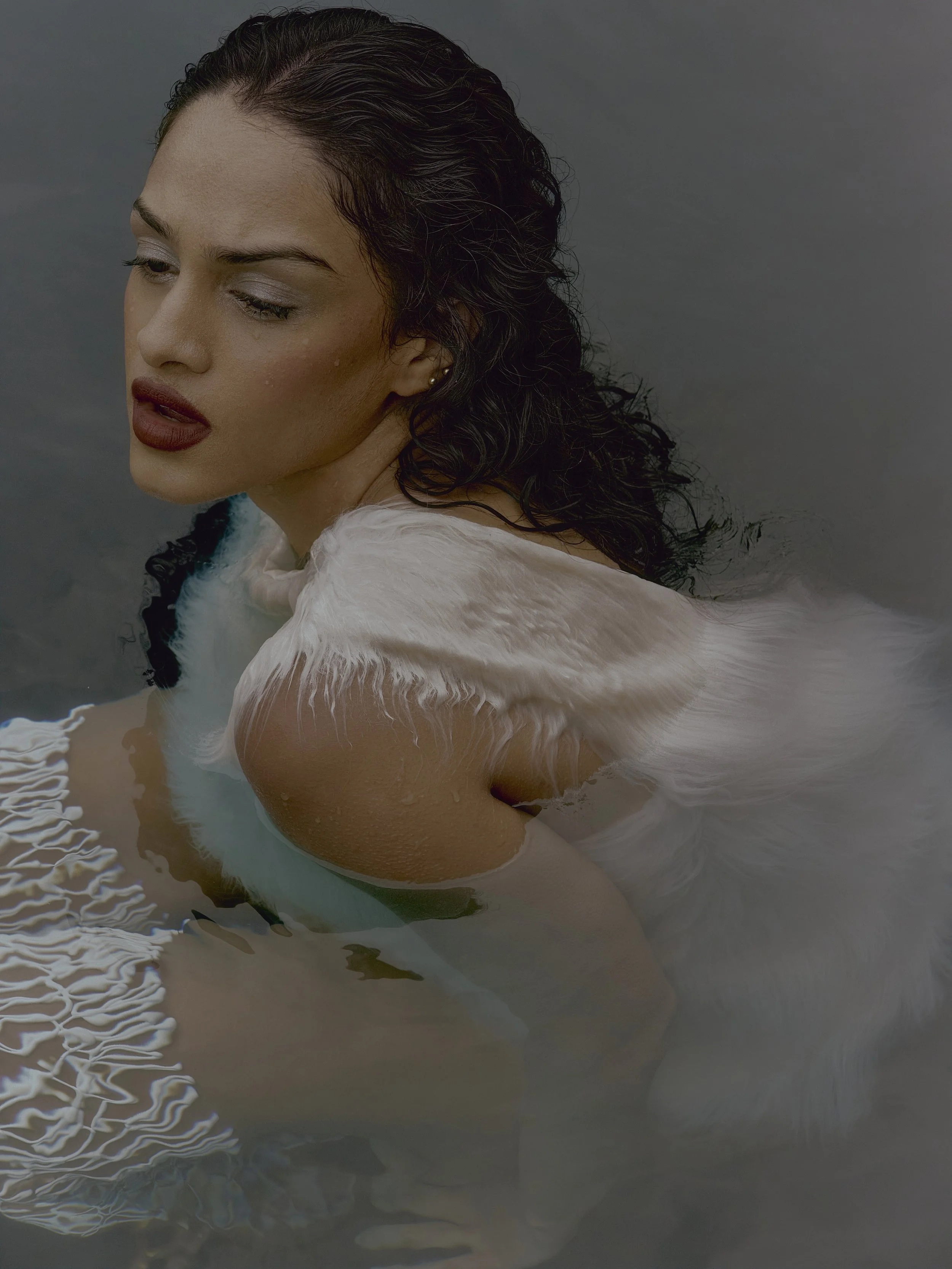
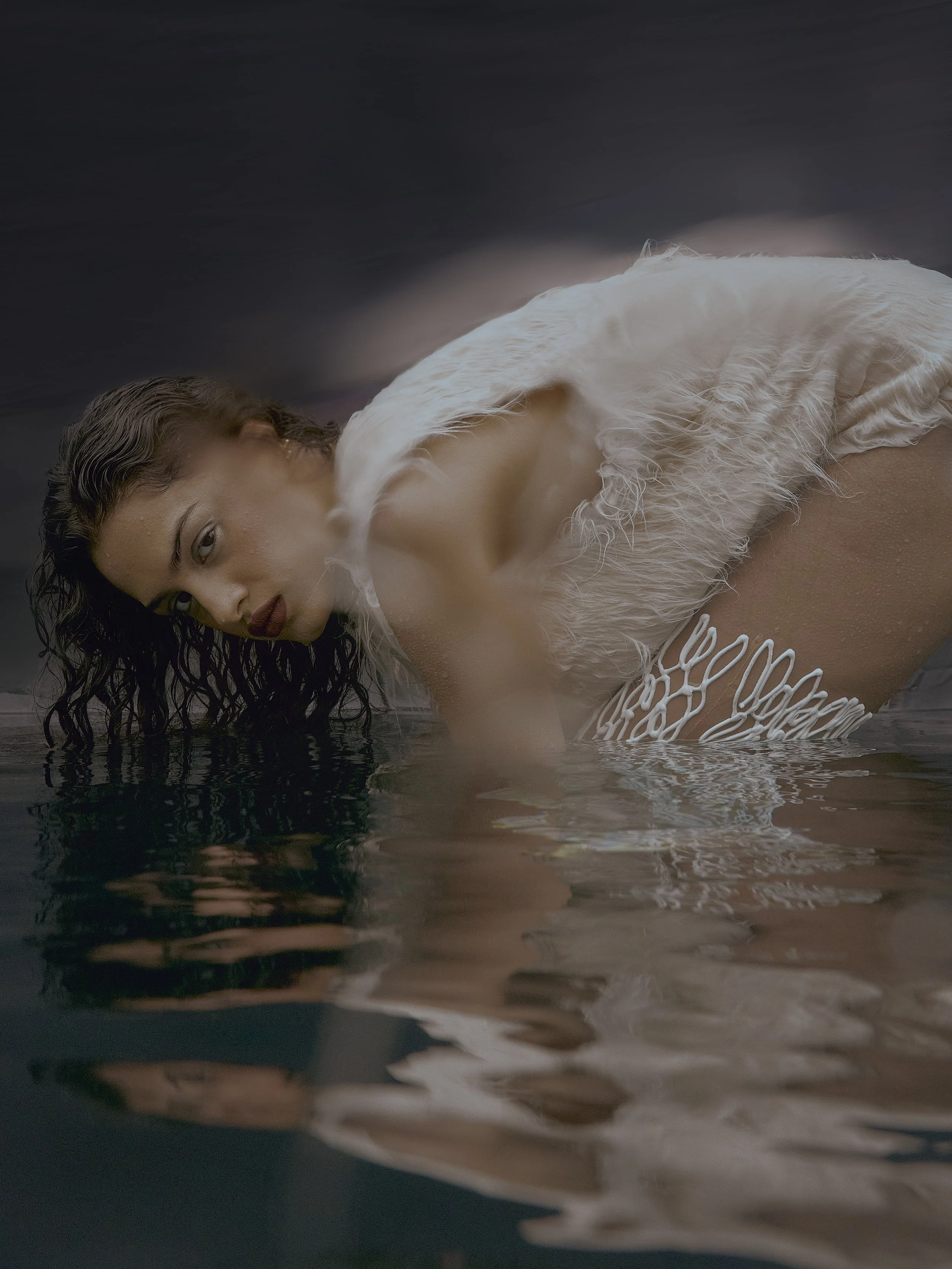
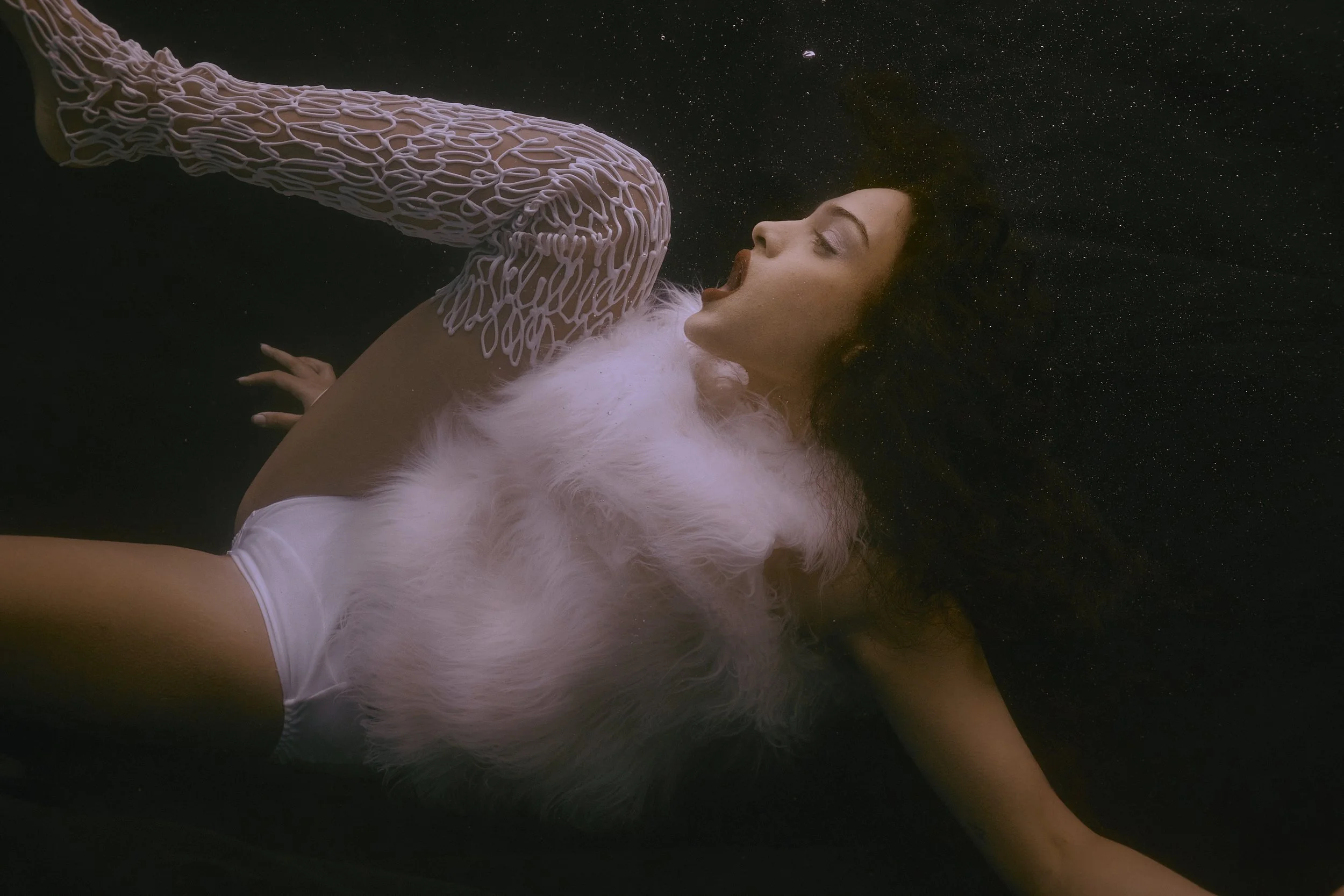
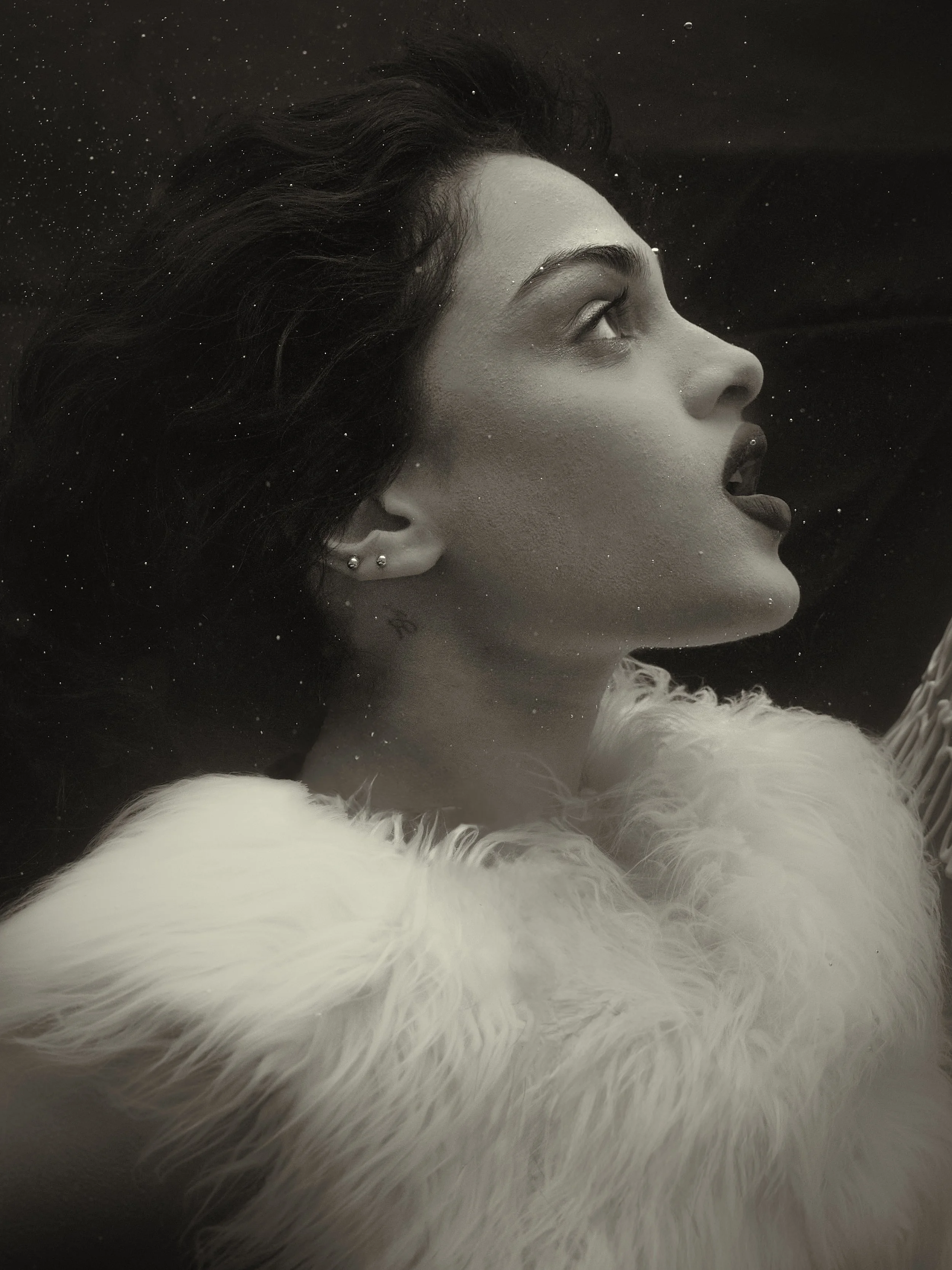
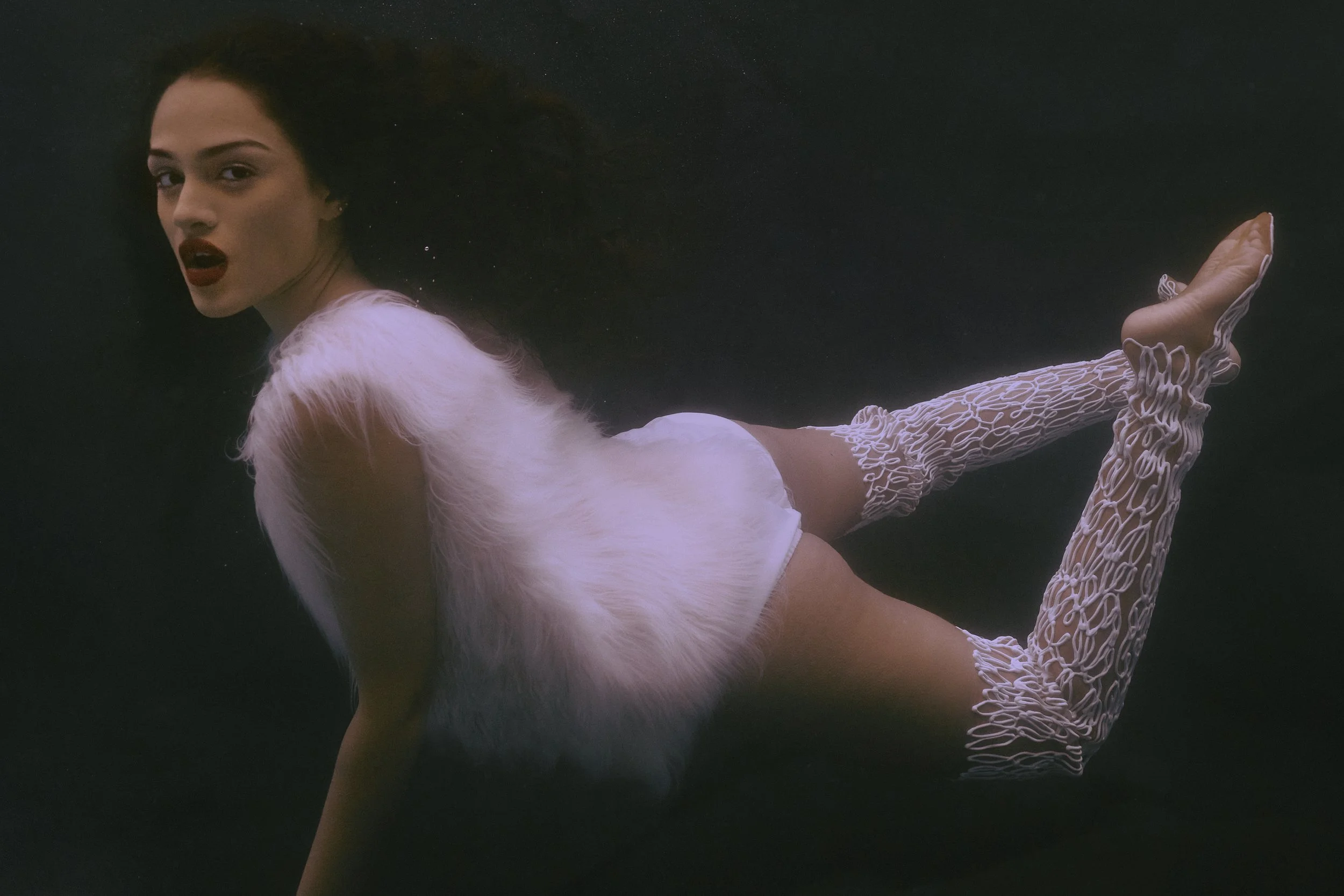
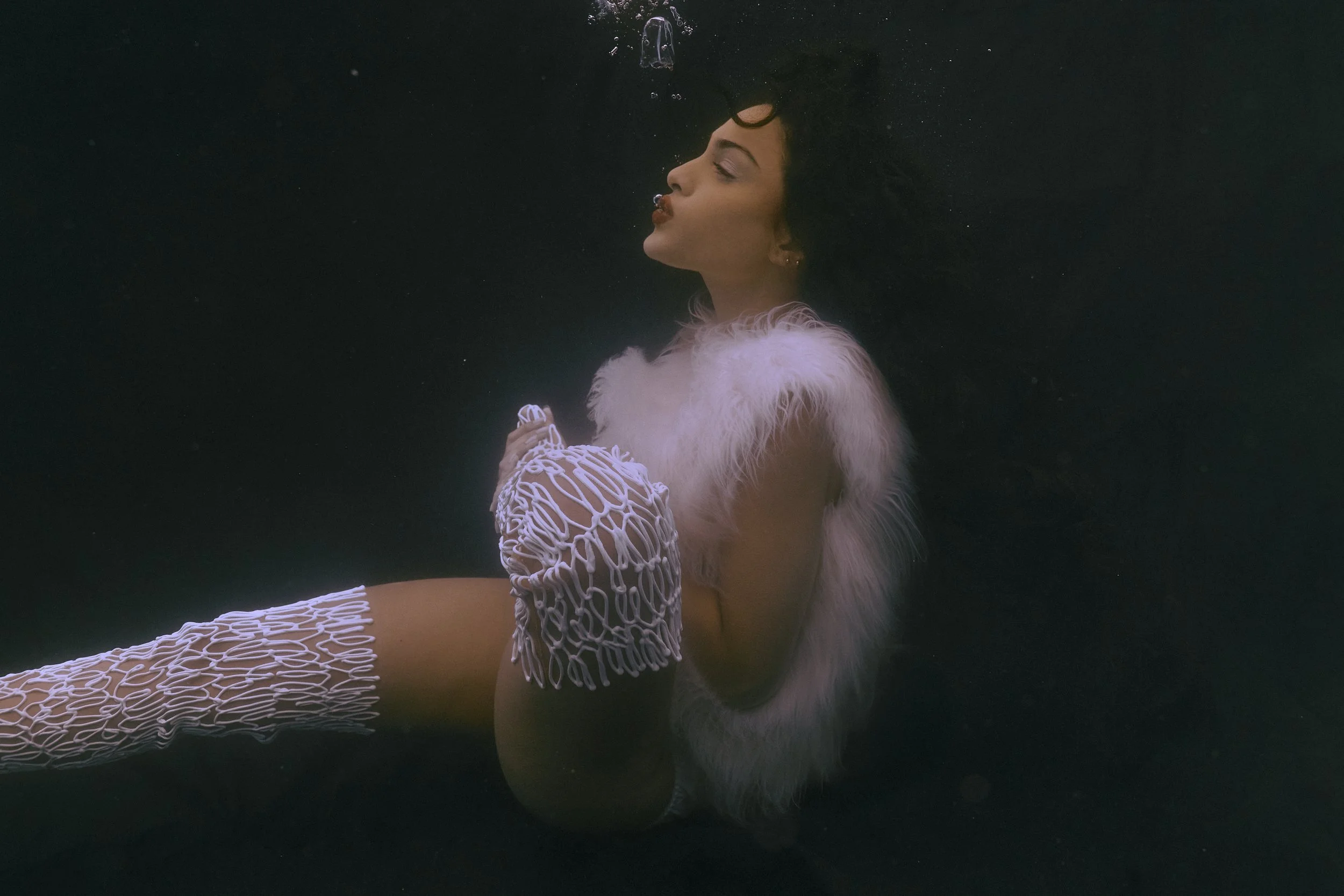
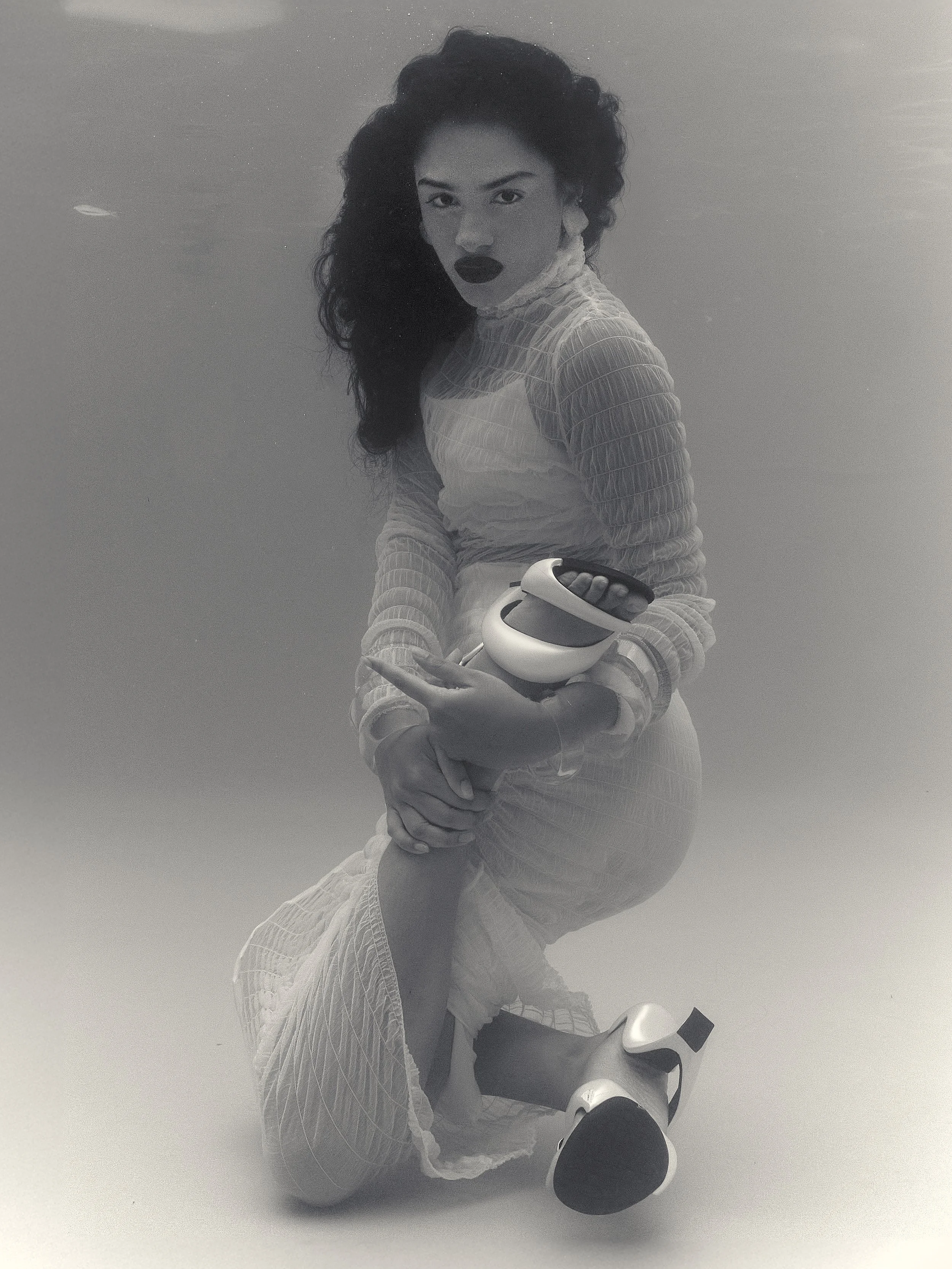
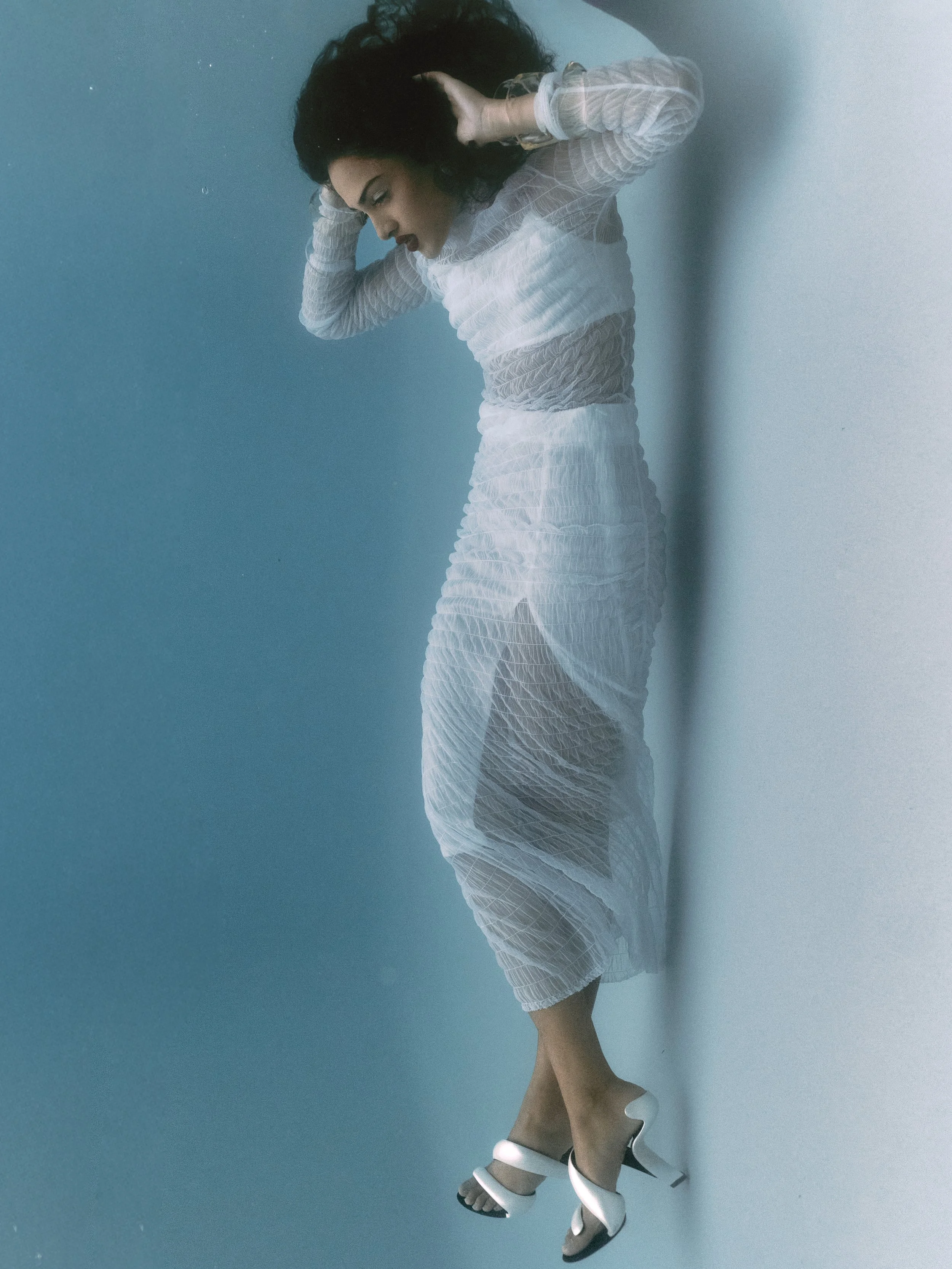
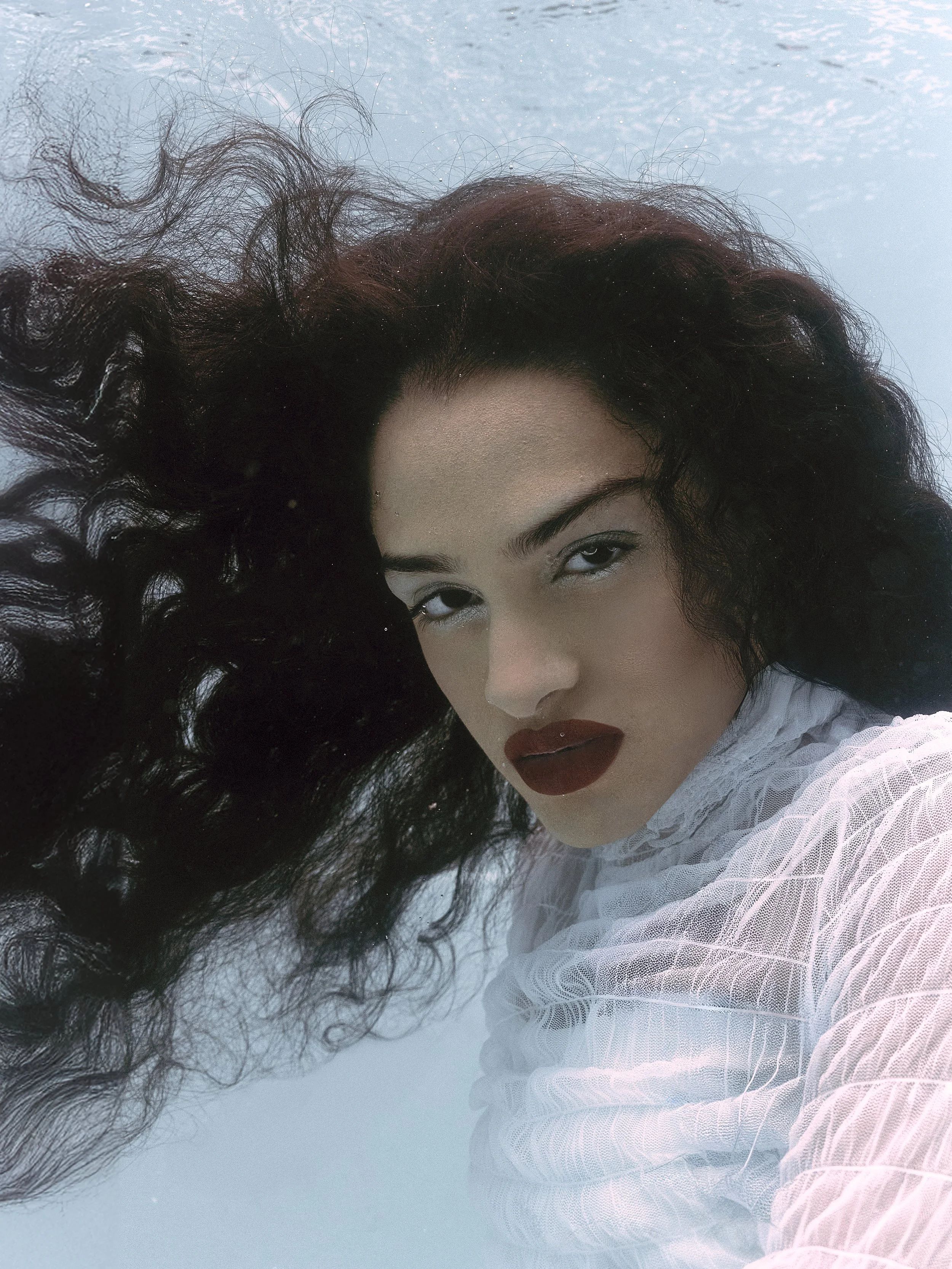
This was my first time trying fashion underwater, having shot while free diving and with divers previously. I really wanted to merge my passion for fashion photography with the underwater world, as I believe there's quite a niche there, and one that's genuinely difficult to inhabit well. Fashion underwater sits at this very specific intersection, and I think it takes a deep familiarity with both worlds to really make it sing. Underwater photography is unlike anything else, you're performing one intense physical activity while simultaneously shooting. You're holding your breath, managing buoyancy, visibility varies, the way everything softens and shifts blue shooting through water. Clothes move differently, hair behaves differently, and facial expressions carry a completely different weight when someone is holding their breath. At the same time, fashion photography has its own distinct language, an eye for styling, for the way a garment should fall, for the tension between a subject and the fashion expression. When you bring those two disciplines together with true fluency in both, something really special becomes possible. That's what drew me to this project, and honestly, I feel like it's a space I could really excel in and make my own.
Why was the final edit selected over the outtakes?
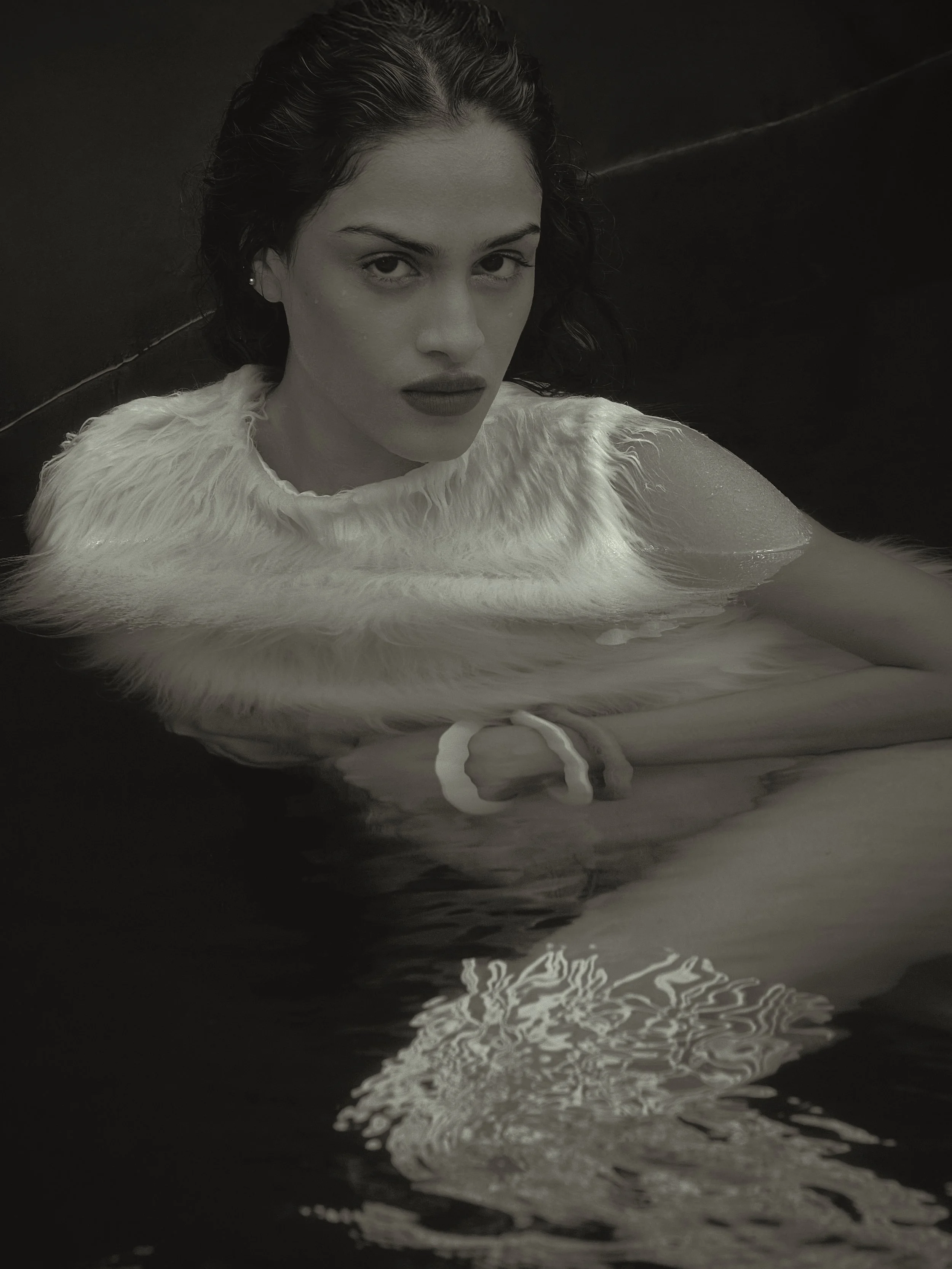
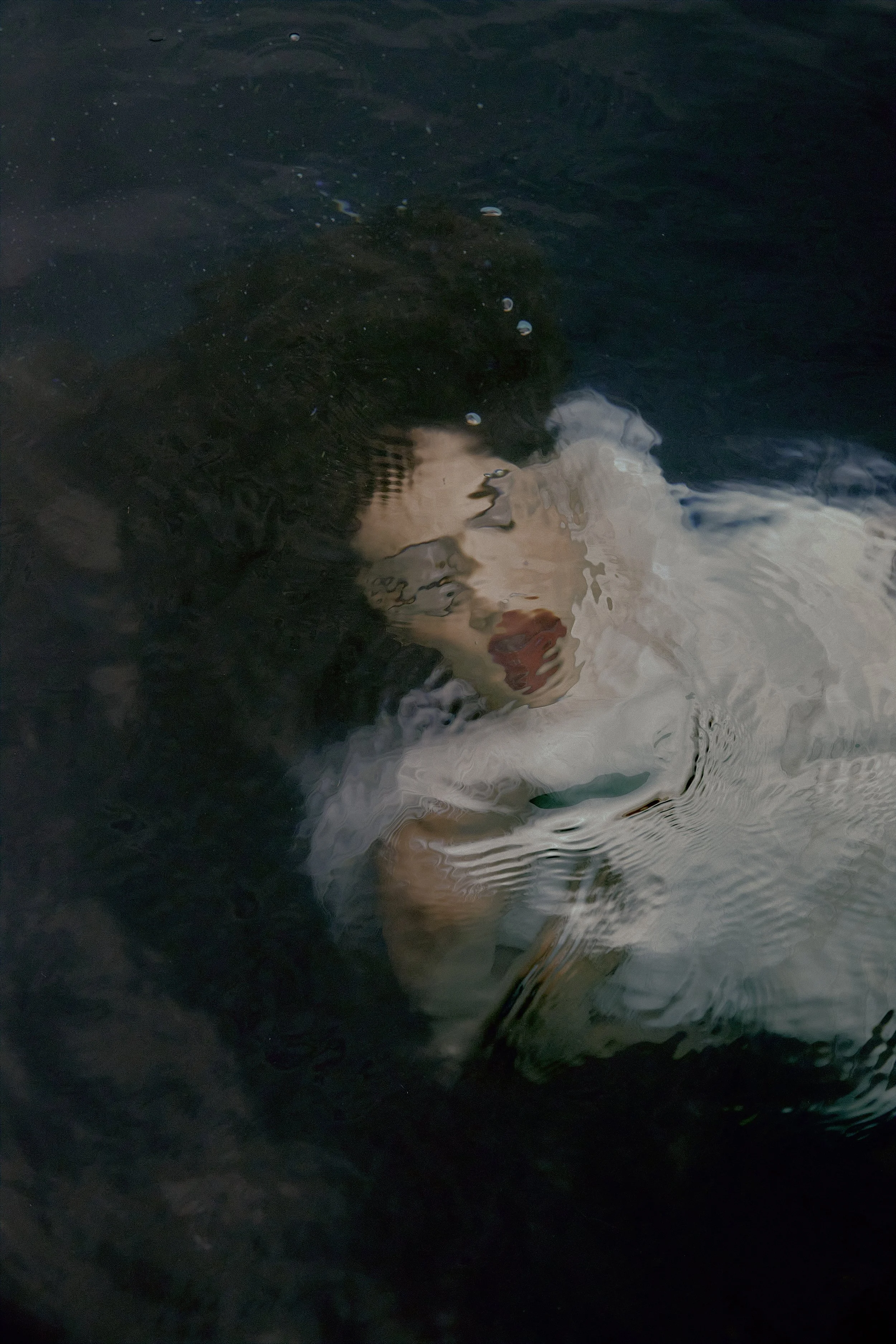
I went into this shoot with a really open mind. My stylist and makeup artist had never done an underwater fashion shoot before either, so we were all experimenting together, figuring out how the makeup would hold, how the clothes would move and react. It was a new environment for all of us which was super cool. That spirit of experimentation meant I came away with a little less to work with than usual, which made the edit challenging. We shot a couple of outfits, but only one really translated underwater, and a fashion story built around a single look is a hard thing to pull off, so I had to cut tight and trust that the individual images were strong enough to carry it. I focused on expression and I wanted to go with those that felt like it almost wasn’t underwater. I am obsessed with that illusion and then in complete contrast, select the ones that exhibit water as a collaborator, where you see the distortion and lean into its fluidity. Looking back, I think these images actually work better as standalone shots than as a story. They're quite similar to each other, and I played it safe when I probably should have pushed further. On the day, I was focused on making sure the model walked away with usable images for her book and for everyone involved. I didn't lean into the stranger, more distorted qualities you can get underwater that you simply can't replicate in any other medium. Normally, I'm tethered to a laptop, building a rough storyboard as I shoot so I can adjust direction in real time. Underwater, all I had was a tiny screen, which made the whole process much more raw and instinctive, for better and worse. In the spirit of seeing what happened, I did shoot some without the black bedsheet you see in the pool. I knew going in that it probably wasn't going to be it. The blue pool was throwing a blue colour cast everywhere. I'd seen some sick reference shots online and my instinct was to try it anyway. None of those frames made the final edit. The presence wasn't as strong – the outfit didn't shoot as well – but I'm glad I did it. You don't really know what doesn't work until you've tried it, and that's the whole point of a test shoot. I also tried some half-in, half-out of the water. The faux fur coat didn't take well to being soaking wet, which unfortunately brought the whole image down. But again, glad I tried it. Variety can add depth to a story and it might have worked better with a different garment. Ultimately, though, I wanted to maximise time underwater, so it wasn't where my focus stayed. A few shots that felt a little too posed (I’m a model posing for a photographer vibe) didn't make the cut either. They were technically fine, but they lacked the same elevated, considered quality as the rest.
Any anecdotal moments during this project that you'd be willing to share?
Danisha had only been signed to her agency for a few months when we shot this. Casting for underwater work is a completely different ballgame to a standard shoot. On a commercial job, you'd absolutely need to test a model in water first, because strength underwater doesn't always translate from land, and vice versa. When I'm casting for underwater work, the number one thing I'm looking for is someone who will give it their all. Water confidence is a must, however, isn’t necessarily enough. There's so much more at stake and a lot of crazy things happening. The model will be wet and cold. They need to be comfortable opening their eyes underwater, unfazed by salt up their nose, hold their breath at times, be totally relaxed moving through space they can't fully control, and being unable to see me while I'm shooting. Great underwater images depend on trust, and if that trust isn't there, you're not going to get them. Danisha was exceptional. She went above and beyond. I was asking her to do some wacky things – move really quickly, do these expressions, be in unusual positions. She nailed it and made it look effortless. What you’re always working towards. There's a quiet confidence in these images that you'd think came from years of experience, and that's entirely down to what she brought on the day. That's everything you could hope for when you're working with someone in that environment. The whole team was amazing. Abbey and Kate. Everyone brought their A game. Fully committed to the point we all were in the pool at some stage. It was so fun!!
Shed some light on how you got involved in this career.
I've been shooting fashion since I moved to Sydney from Melbourne in mid-2020. Back in Melbourne, I'd dabbled in fashion and portrait work, but my main income was nightlife — clubs, gigs, festivals. It was my first professional photography job and a genuinely great way to develop an eye and grow confidence. It can be freeing capturing something as it is, it teaches you to think resourcefully because you can't control what's in front of you. But after three years, I was creatively exhausted. I'd always been drawn to fashion, the outrageous looks, the talented designers, the insane locations. I felt like I'd outgrown Melbourne and wanted to be somewhere new. So I moved to Sydney. I came in wanting to step back and learn. I started as a fashion photography assistant. That didn't last long before I moved into digital operating, which I've been doing for the past five years and still do now, for now. What I didn't anticipate was the lifestyle shift that came with the move. I saw the coastline and got into snorkelling, which led to freediving, which led to scuba, which eventually led to a trip to the Philippines to get my level two freediving certification — and on that trip, I brought my camera underwater for the first time. That trip changed everything. I'd actually made a rule for myself not to bring a camera for at least the first year of diving. A lot of people assumed that as a photographer I'd naturally shoot underwater. I just wanted to dive. But eventually the itch won out. I bought a budget housing, which I still use today, and honestly, thank goodness for it, I probably wouldn't have taken the leap otherwise. Crazy how life works.
Where do you draw your inspiration from?
The natural world is where I draw most of my inspiration. I’ve been infatuated since I was a kid. The ocean, diving, swimming, climbing, trail running, camping, hiking - I just love being outside in all its flavours. There's something I find astounding about the fact that nature simply exists, completely indifferent to us. In a world that's so focused on what humans can build and improve and optimise, I'm endlessly fascinated by what was already here. Almost everything we've ever invented is derived from nature, inspired by, and based on how nature operates. It’s an endless source for me. The greatest thing I took from film school was the importance of good storytelling – how lighting and colour choices and composition can directly reflect an emotion. That kind of indirect, unconscious communication is something I find incredibly powerful, and cinema has been a huge influence on how I think about making images. Other artists inspire me deeply too. I love seeing people who are authentically themselves and finding a way to pour that into their work. I love uncovering how someone else’s brain ticks and that can unlock something in me.
Describe the project that defined you as an established artist.
I’d say my most recent project. I had my debut exhibition, Breathhold, last November featuring freediving photography from that trip to the Philippines I mentioned. I was accepted into Head On Photo Festival's open program and I worked with Canon to print the images. I pitched the show to the Australian National Maritime Museum, who hosted it for three weeks during the festival run in Sydney. My main event for the exhibition was a panel. The first time I'd ever crafted, hosted, or done any kind of public speaking. The topic was the future of freediving, and the panellists were four people with very different relationships to the sport: a freediving expert and icon, a marine biologist, an underwater model and travel creator, and a local freediver based here in Sydney. I also held an artist talk beforehand, walking through each work individually. Over 150 people came. The museum loved it, the crowd was engaged, and the response to the content was phenomenal. What made it feel significant is that I had no resume for any of it. I just decided I could do it. It was also deeply personal in another way. I wasn't sure I wanted to exhibit this work as at the time. It felt incomplete. I kept the selection tight (just nine images) and had to work the curation. But seeing them on the wall, watching people react, finishing the cycle with a physical print, I came away with so much more love and respect for my own work than I'd expected. And it kept living on beyond these six months of work. I had a kind offer to host at Lunar Studios in Alexandria for two months over December and January, and I held a celebration night there that drew over 100 people. For me, this project really put me on the map, not just professionally, but in terms of what I believe as an artist. It's easy to get absorbed in commercial work, fulfilling other people's visions. I've come to feel strongly that personal work is how you stay visible as yourself. How you avoid fading into the noise. That's where real fulfilment lives, and I've never felt more satisfied than I did going through this process.
What’s it like being on set with you?
I have a lot of energy, probably enough for everyone, hahaha. Anyone who knows me, knows that my enthusiasm is through the roof. I have a lot of excitement, joy and charisma. I really try to bring the vibes because the industry at times can take itself too seriously. At the end of the day, we're not saving lives, and I like to keep that stress proportionate. It makes everyone better at their job. The work is better, the team is happier, and you have so much more in the tank when you're not carrying unnecessary weight around with you. Sometimes my perfectionism likes to creep in and tell me otherwise, so staying true to my advice can be a battle, hahaha.
Do you prefer a large or small team on set?
I've always preferred a larger team, though I think it's always case by case. A big team of people you don't know well can mean too many cooks in the kitchen, unclear direction and a bit messy. So what I really mean is a team as large as it can be, made up of people I have great relationships with and real trust in. That's what drives efficiency on the day. The more I can stay locked in on the shot, not worrying about whether it's in focus, if the lighting is right, if the styling is sitting correctly, and how the hair is looking, the better the work becomes. When I have to spread my attention across all of those things myself, something gets compromised. And those details have (in the past) made or broke an image in the edit. That said, a small team of people who are absolute weapons and who you genuinely connect with is an incredibly powerful thing too.
Describe your ideal project.
I'm not sure there's such a thing as a single ideal project. Taste is always shifting. But I'd really love to explore is a project with serious art direction and set design built. The level of set construction I've seen coming out of Korea and Europe, entire environments built from nothing. Every detail deliberate. That's a scale of creative freedom I'd love to be apart of firsthand. It actually connects back to where I started. When I first began photographing people and doing small fashion shoots, I was always led by location. So much so that when I was building my portfolio, I realised I had almost no close-ups. I was constantly fixated on the space, and every decision was a direct response to what the environment was giving me. I've always had a deep admiration for the physical, tactile side of art-making and a lot of that comes from my time studying film and television. I became obsessed with mise en scène, the idea that every element inside a frame is a choice, and that those choices can build an entire universe. That's the standard I want to hold my photography to.
Express what your work means to you.
My work is me, through and through. There's something really special about discovering you have a natural knack for something — looking back at photos I was taking at twelve with a little point-and-shoot, I can see the composition was considered. That I'd found the most flattering light without knowing why, that I was already working with leading lines. I had no idea at the time that I had an eye for it, and when I eventually recognised that, something in me just wanted to honour it. Nurture it. Not let it sit on the sidelines. Photography is my brain exploding into a frame. It brings together so many of the things I love most — working with people, collaborating with other artists, being out in this extraordinary world. It's one big combination of everything that brings me joy in this life. It also means knowing the work lives on beyond the moment and me. It’s a way to reach others. I want to make people feel something. Emotion is the whole point. The full spectrum of it, not just the easy stuff. The fact that we can feel a heartbreak in our chest, our stomach drop, dopamine flood in, that complexity is one of the most fascinating and beautiful things about being human. A strong emotional response, whatever it is, means something landed.
What gear are you packing?
My very first camera was a Canon PowerShot, and I've shot with Canon my whole life. My main body right now is the Canon R5, and my secondary is the Canon R6, which is the camera in the Seafrogs underwater housing. These images had an 8inch acrylic dome port. I’ve since picked up a 6inch glass dome I use more often. A really cool thing is, which I think some people miss, is that fewer megapixels actually means less noise. This is really important for underwater photography because it can be dark and sometimes I need to push that, so to have that creative leverage is amazing. For lenses I'm running the Canon RF 24-70mm f/2.8, the RF 15-35mm f/2.8, the RF 100mm macro, and the EF 70-200mm. I also have a Canon EF 15mm f/2.8 fisheye that I bring out occasionally for a play, I used her heavily back in my club shooting days and still love what she does. I have my mum’s 35mm, a Pentax K1000 in pristine condition. I found it in her closet many years ago. It came with a 55mm f/2 and brought a 28mm f/2.8 secondhand. I shoot film as much as I can. I’m confident on film but I haven’t really worked out my taste, which stocks I like, so that’s a stylistic journey that I’m exploring.
What factors influenced your artistic style?
Colour has always been a huge thread in all my work, particularly my earliest work. A lot of it is way too saturated. I still catch myself needing to pull back sometimes. It's actually the underwater photography that's lead me toward black and white. There's an ambiguity that comes with a black and white underwater image that I find really compelling. It might take you a while to realise it underwater or you might not even realise at all. I love that mystery. I love that a photograph can reward you for spending time with it. But colour always finds its way back in, hehe. I love introducing it subtly – a hint in the shadows, a touch in the highlights, usually leaning toward complementary pairings. It’s a bit whack but I think it gives a little twist of Maddie delight. Being a digital operator has profoundly enhanced my colour grading. I'm constantly working from references, interpreting someone else's brief, feeling my way through it in real time. I’ve built a real sensitivity to colour and unlocked a flair in my artistry. Colour grading is a beautiful discipline in its own right and I think it's one of the harder things to truly master, especially underwater. My fashion background has also shaped my underwater work. A lot of underwater photographers are learning both the technical and the visual language, simultaneously. I came in with the eye already fined-tuned. The foundation and skill set was already there. It was just a matter of applying it to a new environment and working through its unique qualities. Aside from colour, I’m always trying to make things interesting, which actually came from a friend of mine many years. I want to be different. The weirder the better. I think we really need to lean into our instincts. That’s where the good stuff is. When you ride that unexpected wave. It’s a great avenue for finding new ways to improve, and that’s all I’m ever doing. I just want to get better and better.
What would you like to be known for in the creative industry?
I'm already known as someone with a lot of energy and enthusiasm. Joy is my middle name after all, hahaha. I'd love to be known as someone who always did what was true to her and thrived doing so. The industry is full of incredibly talented people, and when there's more creative supply than there is work, the pressure to fit a mould can be real. I don't believe you need to lock yourself into a single niche. Obviously, there's a balance. You don't want to be a jack of all trades, but I think the more depth you have as a photographer, the better. Your work sings, but people come to your concert because of you. What I've learned through experience is that the people who are genuinely impressed by you are the ones who will be in your corner. And this is gold. They're the ones who show up. Who push you further. Who you can build something alongside. This value moves mountains. You can be the most talented, generous, extraordinary person in the room and someone still won't be your fan. So you may as well focus on what you actually love and let that be the thing that draws your people to you. I like to remind myself that none of this will matter in a million years. So you might as well create something that makes you happy, have fun, and live the life you want.
Social media for artists… Give us your thoughts.
Social media is a can of worms that unsettles me but I've made my peace with it, mostly. I can see how powerful it is when photographers and artists build a real personal presence online. People invest in work because they love the work, but they stay because they invest in the person behind it. What I struggle with is the format, the low-fi behind-the-scenes videos, talking to a camera constantly, the relentless churn of short-form content. As an artist who wants everything to feel considered, that rawness can be polarising for me. But then something happened that shifted my perspective. Last year, I randomly started sharing my 10K ocean swim training on my Instagram stories, it was like a diary entry leading up to the big day. I'd arrive on set and the first thing people would bring up was my swimming. Every time. I was blown away. It had nothing to do with fashion photography and, honestly, I didn’t even think anyone cared. But that was the proof. It was a glimpse into me and humans connect to humans. So during my exhibition, Breathhold, I made a decision to actually film content and lean into it. On my own terms. At my own pace. In a way I can sustain. I’m still working on it, so I look forward to seeing how it goes. The bigger picture is that social media has been essential to my career. I moved to Sydney not knowing anyone, and virtually everyone I've built a relationship with came through reaching out online. The key has been reframing it as a tool I can make work for me, rather than something I'm beholden to. The comparison trap is real, though. You are constantly fed what others are doing. You can be proud of your work and then suddenly you’re not. The only way through is staying focused on what's happening in your own world, checking in with yourself, and not treating it like life or death. Because it isn't. And the moment you really internalise that, it gets a lot freer.
Do you have any suggestions to budding artists?
Have the audacity. Just do the thing. Don't be afraid of being seen trying. Do what you want, go meet people, show up, push outside your comfort zone. It's always hardest at the start. That's something I remind myself of every time I begin something new. When you're starting from nothing, that's the hardest it will ever be. It only gets easier from there and knowing that makes it a little less daunting to take the first step. If your old work makes you cringe, that's growth. Roll with the punches and get back up. Commit. Believe in yourself and it will work out. One reframe that's made a real difference for me – I try not to think of things as being hard. I think of them as being a lot of work. That distinction matters more than it sounds. Hard implies something is working against you. Work is just effort. Effort is something you can give. And on the days when things are doing my head in, I try to come back to the fact that I get to do. The struggle makes it meaningful.
Why do you think it's important for outtakes to be featured?
Outtakes are a rare glimpse into someone's creative process. We all have different journeys to the same destination. Most of the time we only ever see the final output, never the turning points, never the reasoning behind why one image made it and another didn't. Seeing someone's outtakes is like watching them refine their own taste in real time. You took all these photos, so in the moment you liked it. It was only upon reflection you moved away from it. That tension is a really interesting insight into the artist’s thinking. The final edit is usually built around a series as a whole rather than any single standalone image. Having recently done an exhibition, I totally understand how different those two things are. Outtakes make the intention of the final edit much clearer. You get a sense and depth of what the photographer was deliberately moving the audience away from. For me, selecting images involves a lot of killing your darlings, as the saying goes. Especially for my website, which I treat as the finest possible edit of my work. Social media can function more like a blog. The test I apply to every image I consider putting there is this… if someone only ever saw this one photo, would I be happy for it to represent me? If the answer is no, it goes. Because that's exactly what happens. Someone lands on your site, scrolls once, and leaves. You have to be completely intentional about what you show and in what order because it could be the difference between someone reaching out or moving on. There's also something quietly powerful about showing less. A tight, confident edit speaks volumes in my opinion. A lot of this is embedded in human psychology. The subconscious signals we send through our choices and actions. How we represent ourselves as both artists and humans. I think this under layer is worth being aware of. We can learn so much.
What’s next for you?
I've been getting this question a lot since the exhibition, and honestly, I just did the biggest thing of my life to date. I needed to lie down for six months, hahahaha. Which, in a small sense, I have been. Eight months of my life went into that one show. It was all I was focused on, and I gave myself permission to decompress. I've been doing some digital operating work, easy income, low mental load, good socially, and spending some time genuinely offline. That's also partly why it took me a while to get back to these questions. I needed to reset a bit. There are projects from the past year that are sitting unfinished, and before I dive into anything new, I need to close those out. I want to do more fashion shoots and underwater fashion of course. I have no shortage of ideas. If anything, that's the problem. I get excited, I start things, and then my perfectionism kicks in and everything takes three times longer than it should. I'm trying to find the balance between honouring the work and actually finishing it, and knowing when each is appropriate. We've all been there, something gets to 80% in a few days, and then you spend three weeks crawling from 80% to 84%. Was it worth it? Ahhhh probably not. Post-production can be a roadblock for me because of this, and in turn can make me jaded at times. But I'm conscious of it, and I'm working on it. I do have a private viewing for a group of gallery curators coming up in a month, Breathhold, and plan to keep the show moving for a bit longer. So, let’s see.
Share a quote you live by.
Ohhh I have so many!! I literally have a little quote book. Whenever I hear something I love I write it in. There’s already a few that I’ve mentioned throughout this, but I’ll throw you something else. This is my favourite one, you regret the things you didn't do more than the things you did. I come back to that one a lot, especially when any anxiety creeps in. It ties in with something else I love to practice, the five second rule. If you think about doing something for more than five seconds, your brain will find a reason not to. So you have to move before it gets the chance. Those two together have been pretty phenomenal for me. Like anything, the more you practice it, the less nerve-racking it feels. So many incredible things in my life have come from random chances I took. I lean into what if. What if this leads to that, what if that opens this door, rather than spiralling into all the ways it could go wrong. That spiral isn't useful. It isn't even really valid. The risk is always worth taking, no risk no reward and when it pays off, it pays off.
How can people follow your work?
Credits for Eau Noir
Photographer, Creative Direction and Post Production: Maddison Woollard
Model: Danaisha Shetty at People Agency
Stylist: Abbey White
HMUA: Kate McWilliam